Dancing on the Bus, a short story I wrote about finding love in unexpected places, was accepted to be included in a recently published book called, Hot Apple Cider with Cinnamon, the third in a series of short stories and poems.
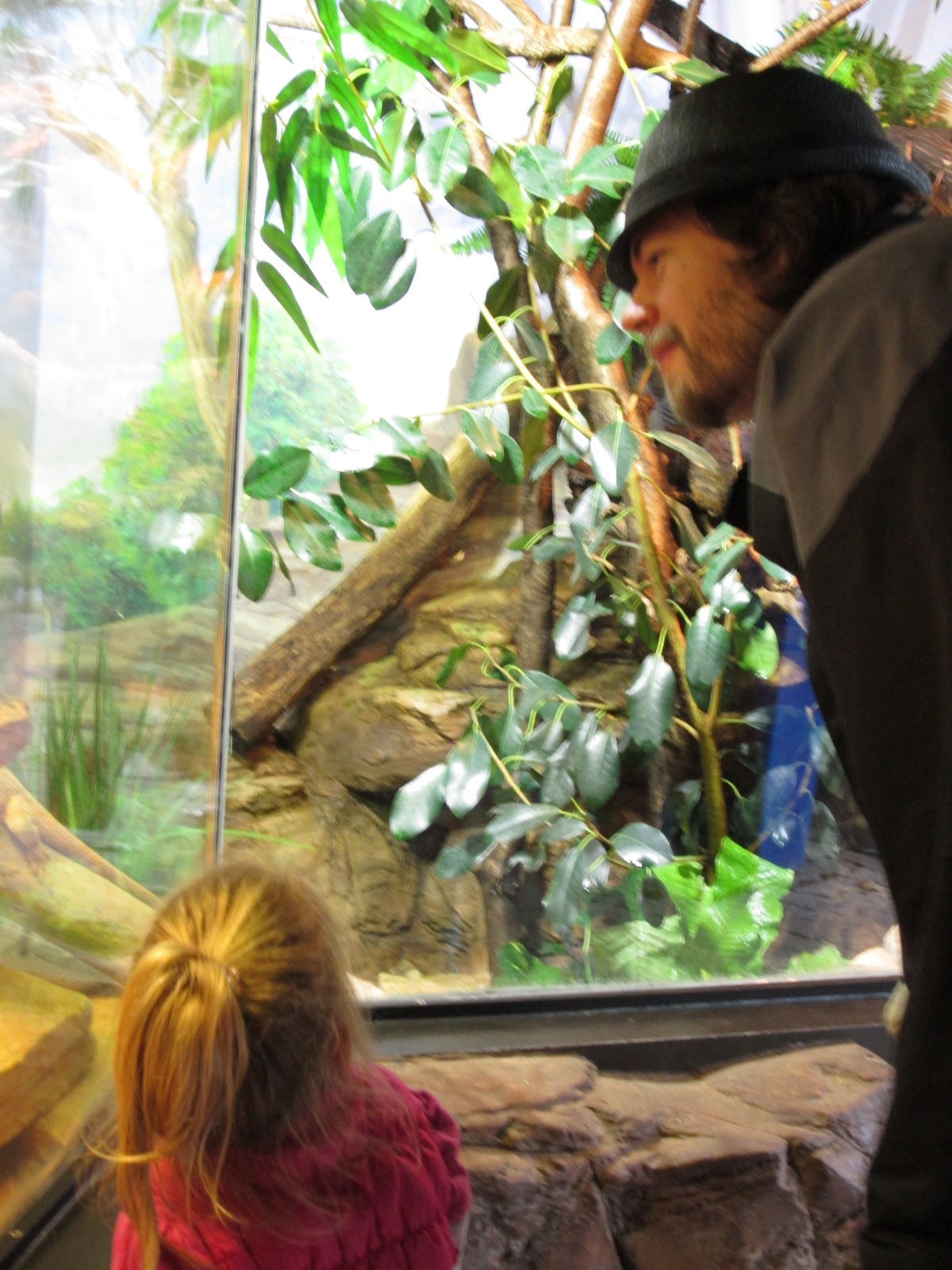
My story is about being accepted and loved as a child, by total strangers. Later, as a mother, I saw that same love and acceptance for my own children. (Side note here; the picture is of my son from the story, showing love and acceptance to another child he met that day for the frist time. Paying love forward never fails).
On Nov 27th, 2015, I will be one of the hosts for the Virtual Book Launch of Hot Apple Cider with Cinnamon. If you read this post in time and can join us, the launch is from 12-11pm, Ontario time. I will be ‘live’ from 8.30-9.
Secret Word for the scavenger hunt is: FAILS
Lynne
PS – Although the launch has passed, you can still view it on Facebook using this link.
I’m very proud to have my short story Dancing On The Bus as part of the newHot Apple Ciderbook,Hot Apple Cider with Cinnamon! The book contains 67 true stories, short fiction, and poems from 61 writers from across Canada.
The men, women, and children in these stories experienced love in ways they’d never have thought of, from people they might not normally have noticed, and in surprising places…
My story comes from a time in mid-century England, where I grew up before coming to Canada. Each story and poem is just long enough to enjoy with a cup of hot apple cider 🙂
An autistic child’s neurodiverse perspective on a daily walk to school with his mother. First distributed as a short story by the child’s counselling centre.
The mother’s neurotypical perspective of the same event follows. We hope we’ve given you a glance into the way an autistic mind differs from a neurotypical mind.
Written by myself and my son, Benjamin Collier.
THE CROSSING-Part 1, written by Benjamin
The Child’s Perspective
Along they walked, side by side. He’d been told enough times now to remember the rule. They always walked side by side when they walked to school. He didn’t have to hold her hand. She said that was ok as long as they stayed together. So he walked by her side and talked in his head to his imaginary friends.
Most of the time, he was oblivious to his surroundings and the other mothers and children who walked the same path. But he noticed that some other children held hands with their mothers, swinging their arms back and forth. Their mothers had obviously told them that they had to hold hands. He wondered why they had different rules from his mother.
He’d come to accept it, but he still constantly questioned why rules applied to some people and not to others. The rules were different for the bigger people, the parents and other adults, and sometimes his big sisters, too.
His mother greeted the crossing guard and the other mothers as they came to the crosswalk.
Then suddenly, her young son darted from beside her and started off across the road. Approaching cars skidded to a screeching halt. Faces were red with panic and anger. The drivers scowled, and the crossing guard blew her whistle with ferocity. The boy’s mother lunged forward and ran to grab her son from in front of the cars.
As she did, she could hear the other mothers shouting heatedly at her son. “Unruly child!”
“That was a stupid thing to do!”
“You know you never cross without the crossing guard!”
And she heard some mutter under their breath.
“Terrible mother” and “Ashamed of herself.”
She carried on across the road, holding tightly to his hand now, trying to ignore the comments and keep calm. After all, they didn’t understand. Her son looked like any other child. Why wouldn’t they expect him to follow all the rules?
The boy heard the words they shouted at him, but he took none of it to heart. They were just repeating the rules, feeding him the information he already had. The rules were just stupid. That’s all there was to it. And there were too many of them.
He preferred his world. There, he could do whatever he wanted without rules, and he could play all day, and no one got annoyed with him. His world was safer and happier. He wondered why other people didn’t live in their own worlds too. Why did they insist on living in a world that didn’t make any sense?
Why did he have to live there?
When they reached the other side of the road his mother kept a tight hold of his hand and told him to look at her eyes. He knew that was the signal she wanted to talk to him. He knew he had done something wrong again. His puzzled little face lifted, and he gazed into her eyes, trying his best to concentrate on her words.
“Why did you try crossing the road without the crossing guard?” she asked in a soft voice.
A question? He wasn’t expecting that. Didn’t she already know?
“It was safe to cross,” he answered, “The cars were all far away. I knew they would stop in time, and they did. I was right. Why am I not allowed to make the cars stop instead of the crossing guard? Why do I have to wait for her to say it’s safe? Why do the cars listen to her and not me?”
His mother frowned a little at first, then something lit up in her eye and her lips curled. He believed that was what people called a smile.
“Because she has the STOP sign,” his mother said, “And you don’t.”
He thought for a moment, a frown on his tiny forehead. Then he looked up at her and gave her his own smile. He knew she liked that, and it’d make her happy.
“Okay,” he said in his matter-of-fact voice.
Maybe someday, when he was old enough, he could buy his own STOP sign.
Satisfied with that dream of the future, he ran to the playing field. Free for a little while till the bell rang and the confusing rules would start again.
She knew their walk to school was always an adventure for him. They would set off from home and stroll along the sidewalk to the road.
It was just the two of them and his four friends; Leonardo, Michelangelo, Raphael and Donatello. He never went anywhere without them. They kept him company in a world where she couldn’t go–not yet, anyway. They were his companions when no one else wanted to play with him.
At first, he would take them to Kindergarten with him, but his teacher had become annoyed several times at his lack of attention in class. So now, they stopped at the playground on the way to school, where he had to say “Goodbye” to his imaginary friends.
Sometimes he would look so sad. He asked his mother if they would be alright until he got them after school. They were as real to him as if they were his classmates–maybe more so. They didn’t call him names.
He ran free for a while. She had come to realize that he needed a lot of freedom from the world he didn’t understand. He needed extra time to just ‘be.’
She watched him as he mumbled words she couldn’t comprehend. His arms flailed, and his voice got louder with shouts and screams for no apparent reason. He was so happy just to run and not be confined to rooms and paths and the never-ending rules she had to constantly teach him. Her baby was happy. She loved to watch him play in his world.
He had learned, finally, to stop at the end of the path and wait for her. They had made an agreement that if he stopped all by himself he wouldn’t have to hold her hand anymore. He rarely wanted any physical contact.
She missed the sweet baby boy she could hold tight and hug all day. He didn’t seem to want hugs at all, but he would let her kiss him goodnight, and he held her hand if there were cars close by; only if there were cars.
They were nearing the crossing guard when he suddenly darted across the road! She screamed his name as approaching cars barely managed to stop in time. One car came to a screeching halt and she saw the look of horror on the driver’s face.
Everyone, the drivers, the crossing guard, the other parents, even the other children, all scowled and shouted at her son. They told him he was a bad boy and he needed to behave better. She ran to the middle of the road and grabbed his hand.
As they finished walking across the road, the crossing guard blew her whistle and held up her sign. The other parents started to cross too. Their whispers were intentionally loud enough for her to hear.
“Terrible mother!”,
“Should be ashamed of herself!”,
“Not enough discipline, obviously!”
They all rang in her ears as she held tight to his tiny hand and got him safely across the road and away from the other parents and children.
She felt like shouting at them all, “He has autism! That’s why he sometimes behaves like he does! What’s your excuse?!”
But she had tried her best not to let her son see her get angry with other people. She didn’t want him to think that’s the way people should deal with disagreements. So she asked him quietly why he had run across the road instead of waiting for the crossing guard to tell them it was safe.
He explained, in his simple, broken words, that he had looked to make sure the cars were far away, and he knew they could stop before they got to the crossing.
He asked her why the cars wouldn’t stop for him if he wanted to cross the road. Why couldn’t he make the cars stop if he was right? Why did they only stop for the crossing guard?
His mother frowned a little at first, then her eyes lit up, and she smiled at him.
“Because she has the STOP sign,” she said, “and you don’t.”
He looked at her, puzzled. She was used to that look all too well. Then, a faint grin came across his little face, a rarity for him. She loved to see him smile.
Off he ran into the playing field, alone, or maybe not. Maybe he had some other imaginary friends who he left at school until the next day. Either way, he was free again, happy in his own world for a few minutes, until he had to join the other children in this world again and deal with another rule that made no sense to him at all.
As an author and Christian Life Coach, I’m often asked about how to get started with a writing career. Here’s a mini-course on just that – how to get started on the writing path. There are lots of coaching tips and I’ve included worksheets to help you through those all-important first stages of decision making and planning, plus a guide to help equip you with attainable goals for moving forward in your new career. This course is for anyone thinking about changing their profession or seeking a solid basis to grow their writing.
Is God calling you to write for Him?
Do you feel compelled by God to write?
Does anyone say your words have impacted or inspired them?
Has anyone in professional writing circles said your work is good?
Have you ever dreamed of writing Devotionals or Christian Romance novels?
If your answer to any of those questions is “yes,” —
Congratulations – You just might be a writer!
As an author and Christian Life Coach, I’m often asked how to start a writing career. Here’s a workbook to help you with that. It has a questionnaire about how to get started on the writing path.
There are lots of coaching tips, and I’ve included worksheets to help you through those all-important first stages of decision-making and planning, plus a guide to help equip you with attainable goals for moving forward in your new career. The workbook is for anyone thinking about changing their profession or seeking a solid base to grow their writing.
Your Write Voice for His Kingdom is available from Amazon as a print book and Etsy as an instant download.
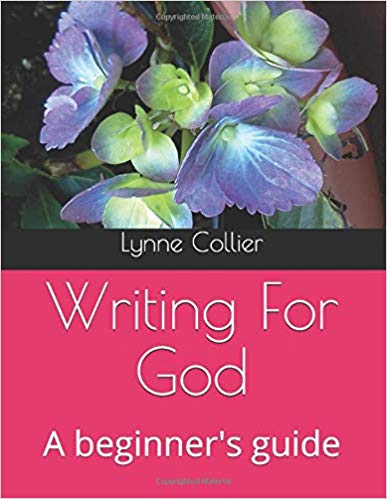
Writing for God – a beginner’s guide.
If God is calling you to write for Him, there’s no better partnership.
You are His masterpiece, Blessed one.
Til next time, know you are loved by the One who made you in His image.





 Lynne Collier