How to Write Poems Within Poems

The Golden Shovel poetry

A child's yellow plastic spade and red pail on beach pebbles.

Image by Sebastian Mey from Pixabay

Terrance Hayes introduced this poetry style based on a poem by Gwendolyn Brooks. I read about it in Robert Lee Brewer’s Smash Poetry Journal. I like it when Lee challenges his readers to try new poetic styles and encourages them to create something different.

The rules of this style of poetry are simple:

· Take a line from a poem you wrote or read

· Use each word in the line as the end word in your new poem

· Keep the end words in order

I’d read a stirring poem by David Hollis on Medium that morning, so I chose this line from the poem as my new poem —

“Imagine if we swam against the tide of popular culture.”

Using each word as an end word, I wrote this new poem.

A woman praising God with uplifted arms.

Image by Barbara Jackson from Pixabay

Can You Imagine

Can you imagine

what life would be like if

all of us lived a fully devoted life and if we

did as Jesus did and swam

upstream against

these modern ideals and the

changes in moral tide

to fully embrace the life of

Christ, even if we’re not popular

with family, friends and the current culture?

~ Lynne

I hope you enjoyed reading this poetic form. I enjoyed writing it and intend to write more in this style. Have you heard of this style before? I hope you’ll try it out if it’s new to you.

’Til next time — remember you are loved by the One who created you in His image.

~ Lynne

This poem was originally published on Medium in the publication Koinonia


Imagine” by David Hollis in “Messages From the Heart of God Volume 2

The Golden Shovel” by Terrance Hayes

*As an Amazon Associate, I earn from qualifying purchases. Thanks in advance.) 😉
How to Write Fibs in Poetic Form

Image by PublicDomainPictures from Pixabay

The Fibonacci Poem

Gregory K. Pincus founded Fibonacci poetry (The Fib) in 2007. It’s a six-line poem that follows the Fibonacci sequence of plus one extra syllable for each line so that the number of syllables in each line equals the total number of syllables in the preceding two lines.

In a mathematical form, it looks like this: 1/1/2/3/5/8.

I’m working through Robert Lee Brewer’s “Smash Poetry Journal.”

Today’s challenge was to carry the Fib further and write a poem of 8 lines, which finishes with the last line being fifty-five syllables long. I’ve enjoyed writing several poems using his book but was tempted to skip this page!

The mathematical form for this is 1/1/2/3/5/8/13/21/34/55.

However, I persevered, and I think I got it right. Please feel free to count the syllables and let me know if I slipped up anywhere. (A sneaky way to gain extra read time there).

I further challenged myself to write it as a continuous sentence. My apologies to editors everywhere.

Here goes.

The Big Fib

The

prompt

today

was to write

a longer poem

using the Fibonacci style

which adds one more syllable to each line that’s written

so that by the time you’ve written the tenth line, you will have a line that has fifty-five

syllables in total in a sequence of an elaborate poetic style that has driven you slightly insane trying to figure

it out and leaves you wondering why you ever made a pact with yourself to do this crazy thing in the first place and what idiotic kind of poem you will end up with when all is said and done — tell me, how did I do?

’Til next time — remember you are loved by the One who created you in His image.

~ Lynne

This post was originally published in Writer’s Blokke on Medium.


Please leave a comment on any of my stories or poems and follow my blog to see when I post something new. 🤗

Research for this article included the original Fib by Gregory K. Pincus.

*I’m an Amazon affiliate, earning a small commission on book sales at no additional cost to the buyer.

Planning My Pots and Plotting My Plants

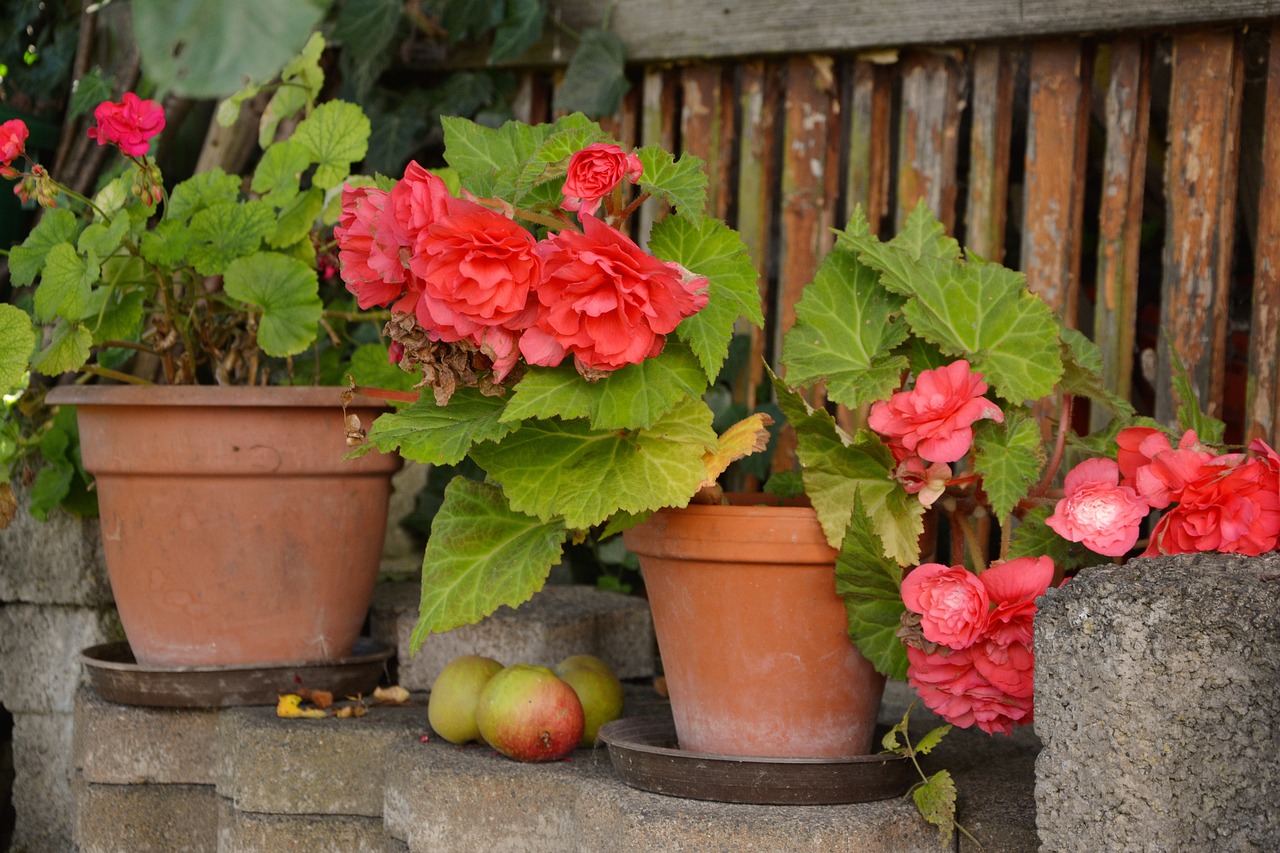
Begonias in plant pots

Image by congerdesign from Pixabay

Spring’s Teasing Cornucopia

In April, after the snow melts
and doesn’t return
before the progging is done
and the soil is tilled
I put pencil to paper
and delight in
planning my pots
and plotting my plants.

The problem with our zone 4 gardens is that the weather has changed dramatically over the past few years, and we sometimes have snow left on the ground when the temperature suddenly rockets to 29 degrees (C).

Because of this, many plants that used to survive the early spring here no longer do. Now, we wait until May 25 to plant our new perennials and annuals when the risk of overnight frost has passed. That’s a long weekend here in Canada and a perfect time to plant new things in newly tilled soil.

I’m happy to plant again this year to celebrate the healing of my broken arm. My favourite colour is purple, so I’m planting this beauty as soon as possible. If it turns out lovely, I’ll take a photo.

Sketch of a planting idea for a pot

rough sketch of a pot idea

Plants — Salvia, Coral Bells, Dusty Miller and Petunia.

*note: “Progging” is an old English word for searching for anything and is widely used to describe the collection of fallen branches and twigs. We use it often in April at White Rose Shire as we experience many storms that down the trees in the woodland surrounding our gardens. I’m chuffed to hear my grandkids use the word whenever they talk of spring at our place.

I’m so happy to be outside in my gardens again–finally!

PS. I published this earlier this year in Weeds&Wildflowers on Medium.


If you’d like to support my writing, please subscribe to Medium to get access to all my stories and poetry, as well as stories by hundreds of other writers. If you subscribe to my profile, you’ll also receive an email when I publish new content. Thank you so much!

How I Find Inspiration for My Poetry

A free verse poem’s origin

A blue heron walking in the marshes.

Image by Pexels from Pixabay

The Evolution of a Poem

Touring the back roads in our aging Vibe

I’m a willing passenger who

notepad at the ready

soaks in the passing sights

proof of the existence of something greater

than my own fleeting life.

Excitedly

I reach for my gel point pen

as I spy a lone heron

futilely attempting camouflage

between stoic stems

of stately bullrush

and turn him into a poem.


Maybe you’ve found inspiration in an unusual way. Share in the comments!

If you enjoyed reading this poem, I’d love it if you follow my writing and other work here:

WEBSITE / MEDIUM / AMAZON / FACEBOOK / ETSY

’Til next time — remember you are loved by the One who created you in His image.

 ~ Lynne

Note: this poem was originally written for Weeds & Wildflowers on Medium, on April 25, 2024.

God’s Spectacular Design in the Chilly Mundane

A poem about the small Winter surprises in the North

Photo by Aaron Burden on Unsplash

Prisms In the Snow

Miniscule rainbows
shimmering like prisms
on white.
I hesitate to step
to crumple
the wonderment
The Creator
blessed me with.

If I did not feel
so inundated
with less ethereal tasks
I’d sit
and soak in
the majestic sight
as a child
until the sun hides Its rays
behind the pines
and I would thank Him
for everyday blessings.

The heavens declare the glory of God;
    the skies proclaim the work of his hands.

Psalm 19:1a, NIV

His creation reflects God’s glory. It calls us into praise and worship of our Heavenly Father every day–if we’re not too busy to see it.

‘Til next time, remember you are loved by the One who created you in His image.

~ Lynne


How to create your own frozen bubbles.

*This poem was originally published on Medium in the Koinonia publication.