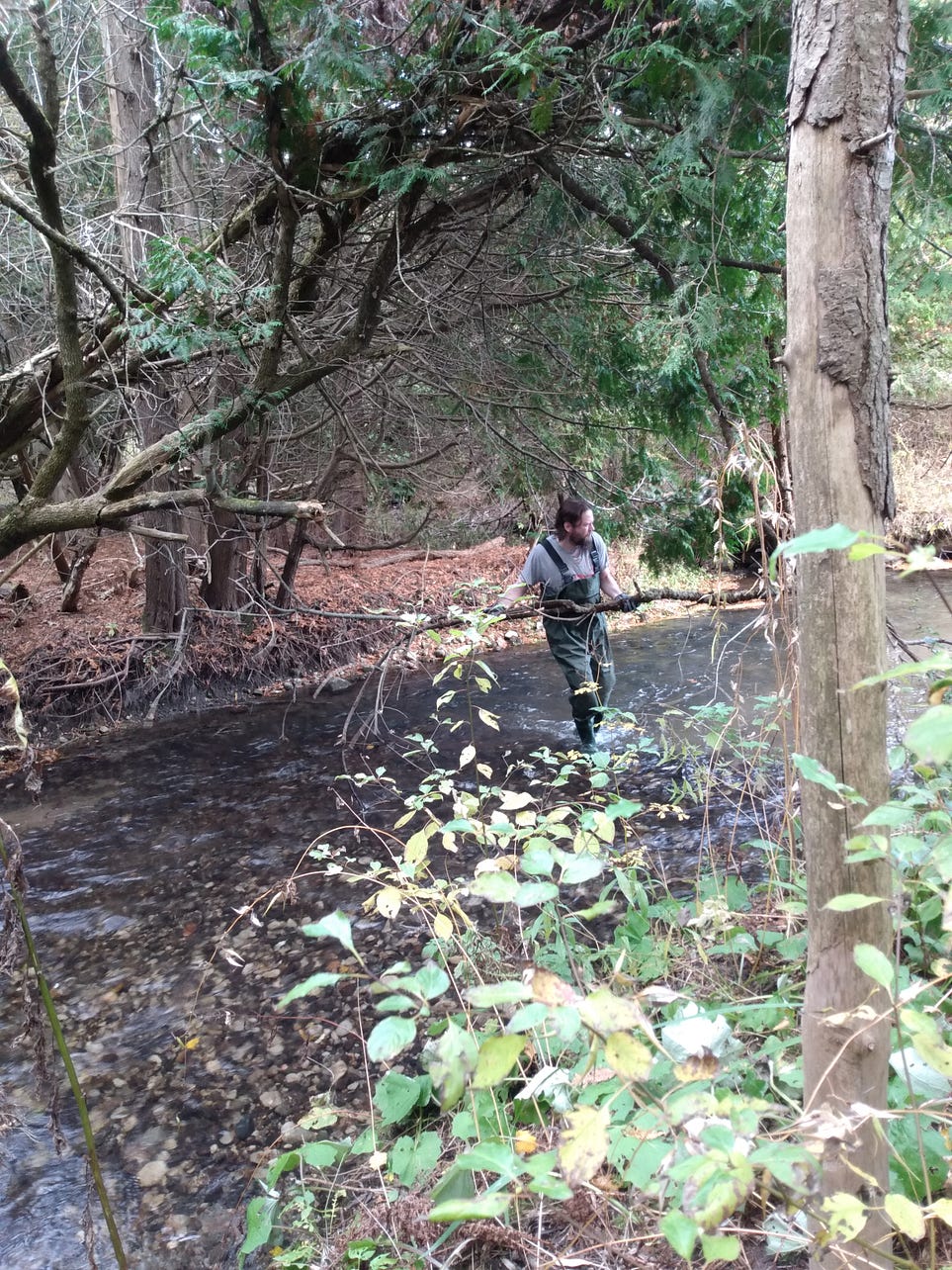
Making a path through debris in the river for the trout to spawn upstream
Ben assessing the debris in the river. photo by Lynne Collier
One of the responsibilities we’ve taken on here at the Shire is to care for the river, making sure it runs clean and clear of debris. Partly because we have two varieties of trout who swim up our section of this river to spawn.
Each spring, and often after a storm, we survey the health of the river to see what needs doing and then decide who’s doing what. As my husband and I are getting a bit older (ahem), our son now has the task of donning waders and jumping into the murky water.
We all used to do this and I actually quite enjoyed it. I searched for a long straight branch that had fallen to help unplug the twigs and leaves that had swept downstream in the spring thaw or a summer thunderstorm.
I couldn’t find waders in my size, so I wore rubber boots (affectionately known as wellies from my childhood in England) or waterproof sandals. Now, I’m delegated to a lookout and emergency contact riverbank supervisor.
I couldn’t find a long straight stick this year, so my husband duck-taped a paint roller head onto a broom handle. I can break up a pile of debris from seven feet away!
Our son is the one who now wades waist-deep in the water and throws large tree trunks onto the riverbank.
Ben tossing the fallen trees. Photo by Lynne Collier
The reward for all his effort is my squeals of joy as we see the first fish swim successfully up the river. It’s such a good feeling to be able to help nature continue to thrive here.
We have two types of trout in our river. Brook Trout and the occasional Rainbow Trout. They journey north through our woodland river from Lake Ontario to spawn in spring and some will come again in late autumn. That’s why we need to clear the river diligently twice each year.
It’s so worth the sight!
’Til next time — thank you for reading, and remember you are loved by the One who created you in His image.
The first thing to do in spring — take down the Christmas lights!
Lynne
The second thing I do is the annual walkabout to see what we have to deal with as far as cleanup.
The January and February snowstorms leave a mass of broken branches and debris everywhere here in southern Ontario. And cleaning it up can take several weeks.
After removing all the decorations from the past Christmas, my husband and son pick up the heavy branches and tree limbs that have fallen. I follow them, picking up the smaller branches and pruning dead ones.
The Walkabout
After the fallen branches have all been moved to the landfill, I finally take stock of the landscape. I walk around the planted gardens, woodland and riverbank with my camera and notebook, taking photos of things to change.
I note any large items I need for interesting focal points and relocate anything out of place before planting my new perennials. I try not to use too many annuals unless I run out of perennials to split. This cuts down on cost, and perennials tend to mound, cutting down on weeds too. Although I do have some favourite annuals I like to use in containers on my deck.
Then, I sit with a cup of tea by the river and write my notes. Sometimes, when a large area needs a different design, I also need graph paper to make sure I get the dimensions correct. I learned soon after digging the first gardens to be aware of where I need new plants and how tall and wide they’ll grow. So many times, in the beginning, I had to relocate something because it was in the wrong light or overshadowed smaller plants.
Writing notes also helps me decide if I need to change things with a view to my garden’s foundational aspects, such as trees, statuaries and bushes. I generally do this in the fall but sometimes things grow unexpectedly or a storm demands changes in the spring too.
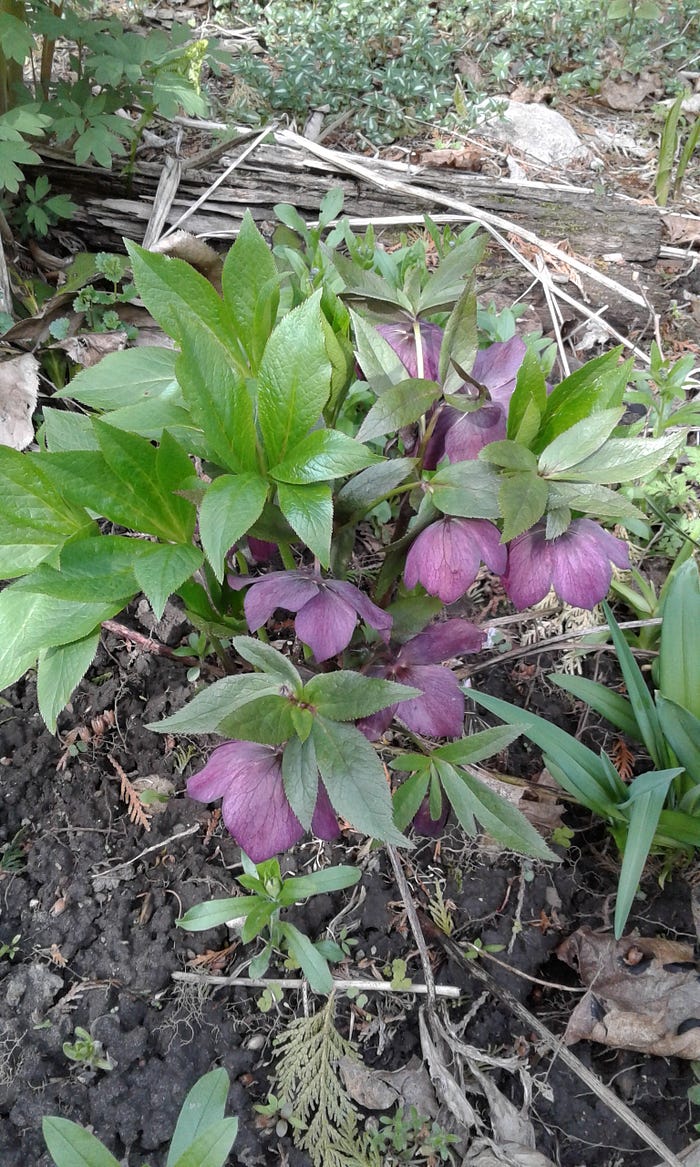
The Lenten Rose
I’m always overjoyed to see my Lenten Rose survive the extremely long winter months. The leaves, a mound of green under the melting snow, bring such hope when they begin to show their colours. Before the ground thaws, these magnificent blooms reach out through the frozen mulch from the previous year to greet us with the promise of a new spring.
Its recorded history dates back centuries when it was used as a medicinal plant. It became known by the common name Lenten Rose because it blooms during the season of Lent. It’s a favourite of many traditional Victorian gardens and ideal for the climate of my zone 4 shade garden.
photo by Lynne Collier
Lily-of-the-Valley
Every year we have an invasion of those plants we love but can’t control. For example, we’re currently battling a sea of Bugleweed in the clearing. Soon, the plant I really hate to love — Lily-of-the-Valley — will be sprouting everywhere in the woodland. In spring, the clusters are so beautiful when the shaded woodland is primarily dormant. Still, the plant can be invasive if I don’t want it to spread to other locations.
Lily-0f-the-Valley is also known as Mary’s Tears due to its blooming time around the Christian Easter event of the crucifixion of Jesus, when his mother, Mary, wept at His feet.
The Lily-of-the-Valley produces strands of small, bell-shaped flowers on top of a single stem above the leaves. The flowers are incredibly fragrant and are used in perfumes and potpourri. It spreads prolifically by rhizomes and grows in the shade where the ground is moist. We find it in large groupings throughout our woodland and the river banks, where the soil seldom wholly dries out, even in the hot summer months.
Though beautiful and fragrant, this plant is extremely poisonous! I always wear gloves when I’m handling it.
One way to rein in the offending invaders is to put them in pots. First, I bury the pot in the garden with the rim flush with the soil surface. Next, I make sure the pot has holes in the bottom for drainage. This holds back plants that multiply by tubers or spreading roots. If the pot becomes crowded, I divide them in spring or move them to a bigger pot. These plants are great as fast-growing groundcovers but will overtake an area quickly if not kept in check.
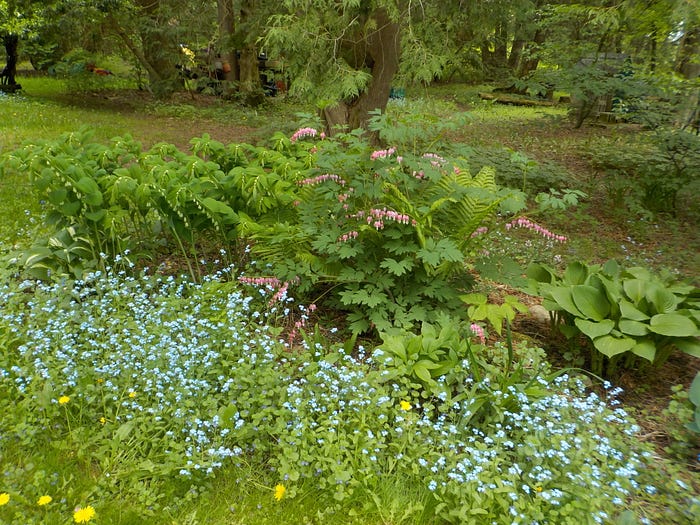
Two more of my favourite groundcovers are the English Bluebell and the Forget-Me-Not, which bloom here in early May. I split these after they flower and fill in bare patches at the woodland edge every year. They self-seed and are very hardy.
I’m happy to see they’ve usually doubled in number the following year. I grouped the plant here in a shade garden with Bleeding Heart, Solomon’s Seal, Hosta and Fern. I also leave dandelion in spring for the migrating butterflies.
photo by Lynne Collier
Here’s a Tip for Next Spring
After the spring plants have finished blooming, I dig up the spent bulbs and plant them directly in the garden using the layering method. Or I plant them in a pot in the ground to over-winter the bulbs. In spring, I take the pots out of the ground as soon as the ground thaws and water them thoroughly. They also make excellent inserts, and I love to display them in decorative containers on my deck.
I also like to leave some pots in the garden after the blooms are spent. This gives me a continuous show of colour next spring, and I find the bulbs will multiply to expand my collection or share with friends.
Spring bulbs are also easy to grow indoors at the end of winter and make wonderful Mothers Day and Easter gifts.
Two ideas for spring bulbs to give as gifts or adorn your own home
1. An easy gift to make; choose a glass or clear plastic container, fill the bottom with pebbles or small rocks or similar material, place the bulbs on top of the stones with the roots down, and water thoroughly. Keep the bulbs covered with water, and a beautiful display will bloom. It makes a stunning centrepiece and the bulbs can be planted outdoors, ready for next year.
Daffodils and Narcissus are beautiful in a vase for spring, as are Tulips and Hyacinth. I love to watch the roots spread in the water.
2. Layering; place approximately 2″ of potting soil in a large pot, layer your bulbs starting with the ones needing to be planted deepest, add 1″ of soil on top of them, then your medium-sized bulbs on top of those being careful not to place them directly above the first bulbs, put another 1″ of soil covering those, then your smallest bulbs above them, cover the top layer of bulbs with 2–3″ of soil to the rim of the pot, pack down lightly and water thoroughly.
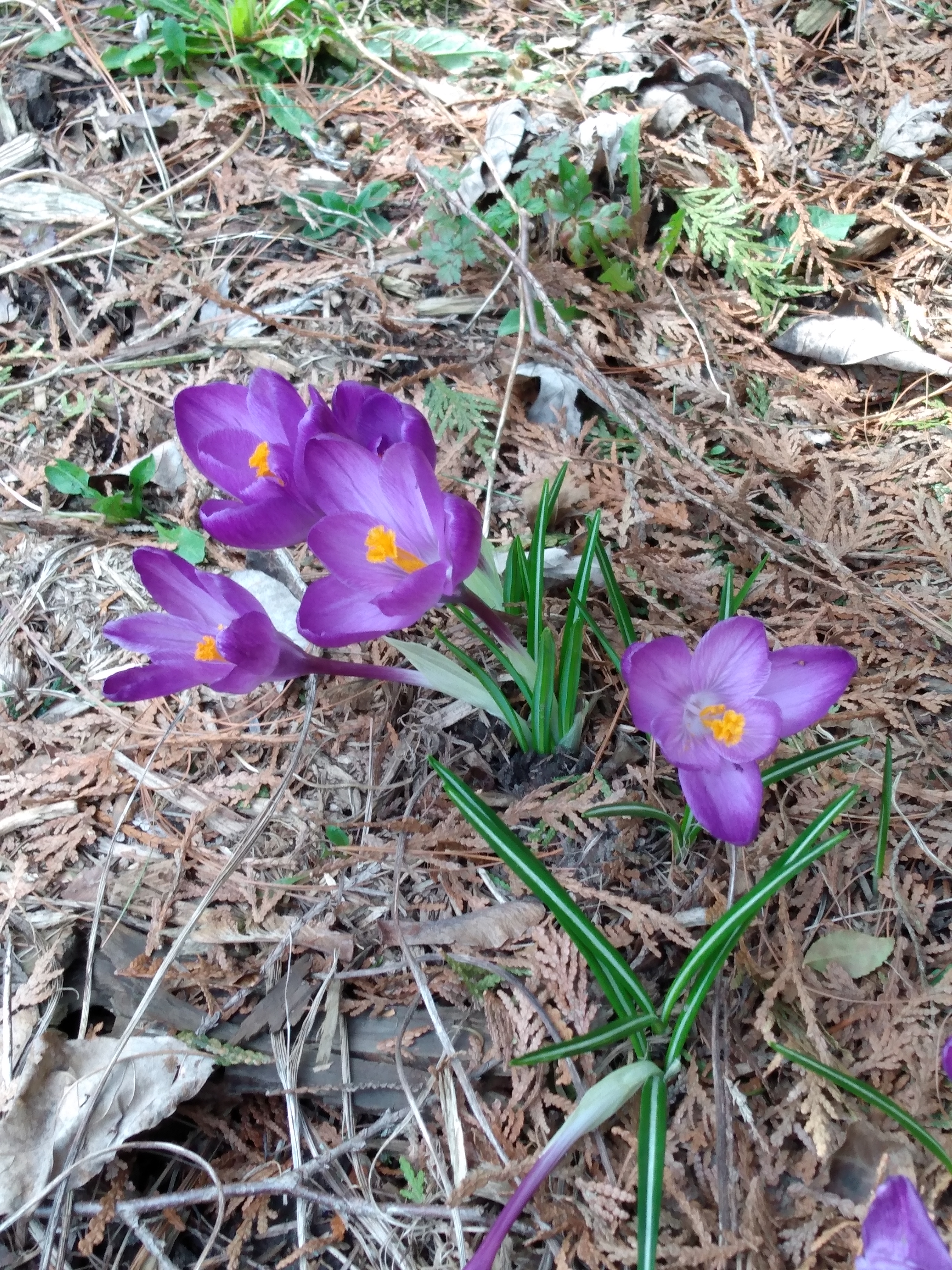
I like to use crocus, tulips and daffodil for this layering technique.
’Til next time — I hope you’re enjoying the much-anticipated warmer weather if you’re in spring where you are. But, if you’re in winter — I feel for you!
~Lynne
Follow more stories about Life at White Rose Shire:




 Lynne Collier