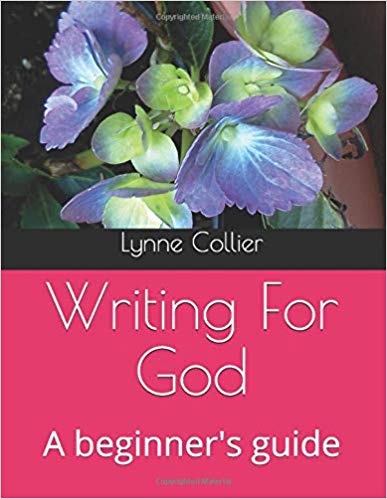
You’ve decided you want to write for God but now what? Most writers who feel they want their work to count for God’s kingdom in some way start out with that question. We don’t know how to write for God, what He wants from us, how to write what we feel He’s asking us to write, or how to get that out into the world when we’ve written it. Does it seem like a daunting task to write and publish something and even more so when our main audience is God Himself? I break all of that down in my new book,
The workbook has pages to jot down your thoughts and collect all the information you need as you discover how God created you for this new adventure. You’ll be able to decide what genre suits you best, which format aligns with you as a created individual, your natural talents and spiritual gifts, and how your personality shines through your work.
You’ll also see how you already have the experience you need to start writing now and hone your craft as you build your portfolio.
“God does not callthose who are equipped,He equipsthose whom He has called.” — Smith Wigglesworth
Don’t be fooled into thinking you have nothing original to write about. No one else has had the exact same experiences as you, so anything you write will be unique and from a different perspective. Write from your heart and people will be blessed
Til next time, remember you are created in the image of God who loves you very much.
The answer to this question will play an important role in the tone of your entire novel. We listen to other people probably every day in one form or another, in personal conversations, a lecture at school, a boss or characters on a TV show. Notice how the tone of their voice influences you. What tone do you want to convey in a particular scene or throughout the entire story?
Interesting
Funny
Lively
Friendly
Romantic
Quarrelsome
The characters telling the story have their own unique voice and, depending on that voice, will tell a scene in a specific way.
8 Points To Ponder For Point Of View
Have you thought about what tense you’ll write in? Will your story read better in past tense or present tense? Past Tense – “Suzie shopped at the mall”.
Present Tense – “Suzie is shopping at the mall”.
When you sit to write each scene, who do you hear talking in your mind?
First Person – “I love doughnuts”.
Second Person – “You love doughnuts”.
Third Person – “Suzie loves doughnuts”.
Omniscient (aka, all-knowing) – “Suzie loves doughnuts but she doesn’t realize they’re laced with a powerful hallucinogenic”. Use this voice sparingly, as when none of the characters knows something but your reader needs to know it.
Choose Your Narrators
Just like in a movie audition, test your characters’ voices to see which point of view sounds best for each scene. You may want to do several viewpoints throughout your story, but remember to not switch viewpoints in the middle of a scene or chapter unless you make a specific break in the narrative. It confuses the heck out of the reader. If you’re new to writing fantasy/fiction keep it simple and write one POV for each scene. You may feel like you want to write the entire story from one POV, but test other voices to see if you can spice things up, add some humour or simply add a different perspective to delight the reader.
Voice Test for POV
Write a paragraph from the author’s POV. This means you just write out the paragraph as it happens, without emotion or opinion. Then write it out in all the voices of your characters who are in that scene. Let them say what they feel and what they’re thinking.
Who sounds good for this particular scene?
Who has an emotional investment in what’s happening?
Who will it influence later in the story as your plot unfolds?
Who sees something no one else does?
Example:
“Suzie went to the mall again. I hope she’s not spending all her money. She still has two weeks before her next paycheck”.
“She went to the mall again. Who does she think she is, buying all those fancy expensive clothes? They look ridiculous on her anyway.”
“Suzie went to the mall this morning. She needed to choose a dress for her grandmother’s funeral”.
Do you see how each character changes the tone of the scene? What were they thinking and feeling? Ask them why. Draw the scene out from your chosen character’s point of view.
Til next time, know you are loved by the One who created you in His image.
Lynne
Resources to check out
Back To The Future – where the twists are revealed by other people’s POV and by the main character.
Apart from the actual storyline, our writing needs to include other elements in order to hold our reader’s attention. Look for ways to incorporate some of the things you find interesting and entertaining when you read a novel or watch a movie. What you find interesting will come through in your own writing.
Add These Elements to Your Stories and You’ll Grab Your Reader’s Attention
Humour
Romance
Relationships
Plot Twists
Fights
Chases
What Are 4 Of Your Favourite Books or Movies and Why?
This is an exercise in finding creative elements for your novels. You’ll write best what you enjoy most because it will come easier. Your story will take on a life of its own as you write so let it flow naturally and don’t think about getting it perfect the first time. You’ll probably find that you automatically write the elements you’re attracted to and, if humour is one of your favourite elements, go ahead and laugh out loud. If anyone’s listening and asks you what you’re laughing about, tell them they’ll just have to wait for the launch date.
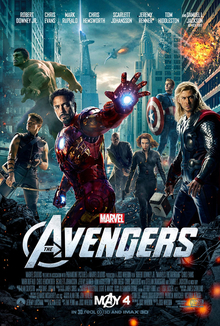
As you read through your first draft later, look for lapses in your storyline and see if you can add more of your favourite elements. Creative elements also serve to bridge the gaps between scenes and break up long dialogue. Have you ever noticed how some movies are good at throwing in humour right in the middle of a battle scene? One of my favourite franchises for this is the Avengers. Iron Man is always cracking me up right before he clobbers someone!
Writing Creative Elements in Fantasy
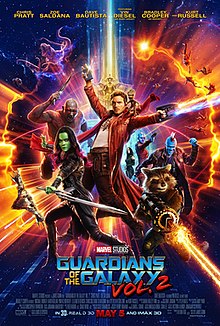
How do you write humour, for example, into fantasy? I love the movie Guardians of the Galaxy, where misunderstanding of the English language stumps the character Drax through the entire movie, but the movie is packed with other elements such as adventure, romance, battle scenes and chases. And let’s not forget Groot! He doesn’t say much, but that’s half the humour. And who doesn’t love to see the baby Groot dancing? Remember to show, don’t tell. The key to making your story memorable is to engage your audience. Be yourself and your own voice will use creative elements naturally.
Til next time, know you are loved by the One who created you in His image.
If you’ve been writing your story along with me, you probably have a pretty good idea of who your hero protagonist, their main sidekick, and the evil antagonist and his henchmen are and what they’re doing when your story starts, but how did they become who they are? Why is your protagonist a charming young female who loves to wander the forests of a mystical land on horseback? Why is her companion an outcast from a faraway land? What led your antagonist to despise all Elves?
What’s the story behind your story?
How do you find out the backstory of your story? As you know, I’m learning this whole process as I go along – like most of you too, I expect, as I write my Dwarf story. Thank you for joining me on this journey.
In my research, I discovered that the best information to start with is the character’s birth. (Duh.)
Sleeping Baby by Tawny Nina on pixabay
I also found as I wrote my first NaNoWriMo novel draft in 2015, it really does help to plot all this before you start writing your novel. I wasted many hours going back to a previous chapter to correct something I didn’t realize about my character until halfway through. Did I mention I switched my focus halfway through the story? Yep, the first half was a superhero and the second half was – well, I’m not exactly sure but it wasn’t a superhero. Something I learned from a fellow NaNo writer was to write all the main characters on sticky notes or in a journal with their own page, then add anything you discover about them as you write so you don’t lose track of information. Scrivener is another, more technical, way to organize your work. (The link goes to their page for a discount).
Let’s start with the protagonist
Where they were born and were there any unusual circumstances surrounding their birth?
Was it an easy birth?
Was the father present?
Were they delivered by a doctor or a travelling healer?
Maybe in their realm, they were delivered by supernatural means.
How many siblings did they have?
Write as much as you know about the birth of your protagonist.
Then go on to childhood.
Did they go to school?
Who was their best friend?
What was their favourite subject?
Did they excel at anything?
Did their experiences as a child influence their career choice?
Were they homeschooled or sent away at a young age to apprentice with someone?
Were they born with all the knowledge they would need in life?
How did that happen?
Your protagonist as an adult.
What drove them to be in the situation they’re in now?
Did they suffer prejudice, health issues or a failed relationship?
Write as many life events as you can think of and delete each one as you write.
Be open to adding new things you discover about your protagonist as your story unfolds.
Let the story evolve and delete any notes that no longer apply.
Then do the same for your major antagonist.
Ask why they’re angry, mean, and vicious.
People don’t start out that way as a newborn baby so what happened in their past to steer them down that path?
Is the antagonist driven by fear, guilt or jealousy?
Why do they have metal teeth or wear a mask?
Do the same for a few minor characters. Write only what’s important for your reader to know, not their entire life story.
Take a look at The Watcher by Sara Davison as a great example of backstory for her protagonist, Kathryn Ellison. The Watcher on Amazon.And Great Expectations has a wonderfully written backstory for the antagonist, the embittered Miss Havisham. Great Expectations on Amazon.
So you have a nice fantasy/fiction story going on and you have a happy ending. Guess what? We’re going to turn that all upside down now! Get ready to throw your readers a curveball and upset the apple cart. Every story needs conflict – even children’s stories. Think about it. Where would Little Red Riding Hood be without the big bad wolf? We all love a villain to hate.
Little Red Riding Hood and the Fox
10 Things To Consider Before Writing Conflict
Some elements to think about as you write the outline of your conflict.
What motivates both your hero and the villain so they’re drawn into the upcoming conflict?
Love
Greed
Pride
Anger
Duty
Other ideas…
What keeps your hero and villain locked together in this conflict?
Past History
Jealousy
Mutual Love Interest
Loss of Someone or Something
Misunderstanding
Other ideas…
12 Key Elements On Writing Conflict
Your hero tries to understand what just happened in the inciting event and what it means to them and their way of life. This is the start of Act 2.
Reveal the power of the antagonist (villain) and the true nature of the conflict arising.
The hero begins to recognize what’s at stake and searches for ways to fight the battle.
Your hero recognizes the true reason behind the conflict.
With new knowledge and understanding, your hero gains headway in the conflict.
Foreshadows Act 3 (sets up the base for what’s coming next) and reminds the hero what’s at stake. (We’ll look at foreshadowing more later).
Your hero rallies everything they’ve got and launches it against the enemy with a seeming
A defeat for your hero after the seeming victory in Act 2. This begins Act 3.
The hero questions their goal, commitment and choices. They begin to doubt themselves and their ability to win the battle.
Your hero comes face to face with the enemy.
The next event is a duel to the death for the hero and the villain. This can be physically or metaphorically. The reader needs to be kept on the edge of their seat here because they know one or the other will lose.
The hero wins and the conflict is ended.
The ending of your story should give the reader ‘breathing space’ and ease them into the hero’s new reality.
Watch a favourite movie – it doesn’t need to be fantasy – and see how the conflict escalates and is resolved.
Til next time, know you are loved by the One who created you in His image.






 Lynne Collier