Writing Fantasy || Story Arc

What Is a Story Arc?

Most best-sellers and box-office hits have a main character that goes through an enormous transformation and either becomes a hero or ends up becoming a villain. (Anakin as he turns to the Dark Side). The result is what keeps us talking about it long after the story has ended and we’ve slid back into our own reality. It’s this change that intrigues the audience and keeps them riveted to the story, not wanting to put the book down or leave the theatre for a refill of popcorn for fear of missing something huge.

Darth Vader
Darth Vader

4 Key Elements For Character Arc

Award-winning novelists seem to agree that there are four key elements to a character arc which drives a compelling story arc.

  1. Need
  2. Yearning
  3. Weakness
  4. Desire
  • Your story will usually begin with your main protagonist and their setting. His life lacks something he needs and causes a sense of something unfulfilled.
  • The need may be fuelled by a yearning which he may or may not be aware of.
  • The yearning may come from a backstory that caused them to feel weakened by a loss of love, ability, or perhaps a sense of purpose, and makes them fearful, limited by their circumstances and feeling unable to change. The yearning is most likely to be the opposite of what the protagonist’s life is like now. Identify their yearning in a single sentence and let that drive the story arc, for example, he wants to be free (of something or someone), to find true love, to go home again (or make a home for himself).
  • Something happens to your protagonist that changes their view on their daily life and stirs a desire for change. This is the Inciting Event.

This will all happen in Act 1. After the event that happens to your hero to stir their desire, you’ll be ready to think about your story arc and which scenes belong in Act 2. This took me some time to figure out, but I think I have the most important points now. Remember we’re not writing yet, just outlining. Simple point form or one-sentence sticky notes will do.

The Anticipated Conflict

Create intensity towards the anticipated conflict. About a quarter of the way into your novel, the hero will be frantically searching for a reason behind the villain’s antagonism. The hero may not yet realize there’s an underlying cause for the building conflict, or they may have a vague idea but not yet know what’s at stake. The villain may still be taunting the hero to make them give up and turn back.

Before the halfway point of your story, the hero will realize the true nature of the conflict which is imminent and the ultimate power of the villain. Do your notes on story arc build up to your halfway conflict? Include your notes on the hero’s personality and flaws that hold them back, how their mentor tries to persuade them to believe the truth, plot twists, and some fun scenes with their companions for comic relief (The Avengers).

Next time we’ll look at how to generate conflict and why it propels the story.

Til next time, know you are loved by the One who created you in His image.

Lynne


Resources:

Personality Types 

Star Wars – Episode III: Revenge of the Sith

The Avengers


Writing Fantasy || Outlining Scenes

3 Main Components of a Novel

All great stories have three main components:

  • A Beginning – The comfort zone of the protagonist and the inevitable separation
  • A Middle – Resistance of the oncoming event and the struggles moving forward
  • An End – The hero’s transformation and return to a new normal


Organizing for writers
Organizing Your Work

Use whatever method you’ve discovered works for you as you collect your ideas for your epic fantasy story; sticky notes, mobile device, notebook, dry-erase board, whatever. Use something you can manipulate. You’re going to want to move things around when you realize a particular scene needs to switch from the beginning to the middle, for example.


For this reason, I like to colour-code the scenes once I figure out where they belong. Highlighting them makes it easier to spot them in the array of my imagination on the screen. Then write, write, write!

Every scene that’s been playing around in your head and kept you awake all night or distracted you during a sermon (it’s ok, it was God who gave you your imagination so He’ll forgive you if it veers you off once in a while). Then put them under the headings Beginning, Middle and End, or if you prefer, Act 1, Act 2 and Act 3.

Once that’s done, rearrange your scenes in the order you think they need to happen.

Remember you’re only writing what’s going to happen in your scenes, not the entire scene right now. This is extremely important if you’re using these blogs to prep for NaNoWriMo where you’ll need to write 50,000 words in 30 days. These blogs are about outlining (preparation) before you actually start the writing process.

The Beginning – Act 1

Begin at the beginning. Sounds like a good idea – very logical. The beginning is where all the groundwork for your story belongs. Here too, you introduce your reader to the when and where of your story. So here is where you put your world-mapping and world-building ideas and make them into scenes (something happening at the time and place in the world you’re describing). Write one or two sentences about what your scene will be.

The Status Quo

Introduce your main protagonist (hero) in their normal everyday life and the world they live in. (In LOTR, Frodo is a Hobbit who lives in a small house in a shire. He loves life and he likes people).

The Catalyst

The event that calls the hero to act on something and leave their status quo. (His uncle vanishes and leaves Frodo a magical ring).

They embark on a journey, either physically or emotionally. Usually, in fantasy, it’s a journey away from home. (In LOTR, Frodo sets out on his adventure).

The Denial

Your hero rejects the quest at first either from fear, hesitation or pride. (Frodo is reluctant to leave his comfortable life).

The Mentor

Your hero will need a mentor, someone who has experience and wisdom which will prove vital to the hero on their journey. Introduce the mentor here. (Gandalf is Frodo’s mentor as he leads him on the adventure).

The mentor will aid the hero through some sort of transformation.

Acceptance and Action

Introduce minor characters but introduce one at a time to give your reader a chance to familiarize themselves with everyone in the story. (In LOTR, we’re introduced to Sam, Pippin and Merry).

Their journey begins.

“Don’t do a lot of world-building before you start writing. Do just enough to get the basics clear in your mind, then let the characters reveal things to you as you work”. – J. Anderson Coats, author of The Wicked and the Just. 


The Middle – Act 2  Trials, Tribulations, Friends and Foes

The Edge of the Abyss

Your hero will encounter all of the above; characters who will help your hero or hinder their quest. There will be tests to determine who is a friend and who is a foe. (Orcs, a stranger who becomes a good friend and ally, dark riders on horseback).

Your hero will need to decide if they will carry on with the quest, turn back, or run. There is a crisis. (Frodo has a crisis of courage, feeling that he cannot go on).

“Write short, sharp, heart-clutching scenes that propel your characters through conflict, adventure and resolution. Let your characters guide you”. – Elizabeth Sims, Novelist, Writing Coach and Editor.


The End – Act 3  The Climax and The New Normal

The Climax

Your hero faces their biggest test/fear in a confrontation with death or another big event. (Frodo knows he needs to destroy the ring but it beckons him, and he shows his weakness).

The Resolution and Reward

Your hero earns the prize and journeys home or on to a new normal. (Frodo goes back to the Shire, but his life will never be the same).

Rearrange your scenes until you’re satisfied with the order they’re in so the story outline starts to make sense to you. Fill in the Middle with several action-packed scene ideas. As always, learn from the masters by reading fantasy and watching fantasy movies. Keep a notepad handy and try to draw out of the story all the points in this blog.

How is your novel organizing coming along? Would a novel planner help? After I wrote my first rough draft of my first novel for NaNoWriMo I created a planner along with my super talented graphic designer, Kirstie Shanks. It’s now available on Amazon. It’s also available as a printable version in my White Rose Writers Etsy shop. (White Rose Writers – The Business Of Being An Author is my source of income).

Til next time, know you are loved by the One who created you in His image.

Lynne

Writing Fantasy || 5 Epic Moments

How to Write an Outline for Your Novel

Researching this week, I discovered we need to go back to our premise and plot twists to see if we can now add more interesting content to the ideas we wrote. What can you glean from the premise you’ve written?

Ask the right questions for outlining your novel.


5 Epic Moments That Will Define Your Story Outline 

Can you think of five major events that will occur in your novel? Can you think of five ways to add your plot twists to each of those events?  When adding your plot twists, think about how these will affect the story:

  • How will this affect the protagonist?
  • Will you need to add backstory for your protagonist to show this effect?
  • Who else will be affected by this plot twist?
  • Is this a good place to add conflict? If so, between which characters?
  • Will this interfere with your protagonist getting what they want? How?
  • Will it cause a disaster for your protagonist?
  • Does your world-mapping need more of a fantasy backdrop for your plot twist to be epic?


Do this exercise for all your major events and you’ll have a good outline started. Try to write a rough scene for each one to revise later. If you hit a wall don’t give up. Read a book in the same genre, or brainstorm with your writing group, then just start writing and ‘pants for a while. Letting the juices flow freely may stir a firework display of creativity.


VisualWritingPrompts

If you don’t have any scenes spinning in your head yet, watch a TV show in the same genre as your novel. This works great for me. I’m glad I have a pause button so I can write notes as I watch. You can also find some great visual writing prompts on my Pinterest board. Later, you’ll keep what fits and file the other ideas for another time or maybe another novel.


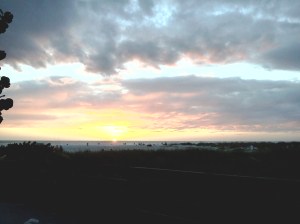
Sunset on the beach
Sunset Silhouettes


Here’s a prompt to get you started. What do you see in this picture? A peaceful sunset at the beach, an approaching storm, or perhaps a scary scene from The Walking Dead with a horde of zombies approaching?


Til next time, know you are loved by the One who made you in His image.

Lynne     


Resources for Outlining a Novel

White Rose Writers on Pinterest

Outlining Your Novel, by K.M. Weiland

Writing a Book by Jeff Goins

Writing Fantasy || Character Interview

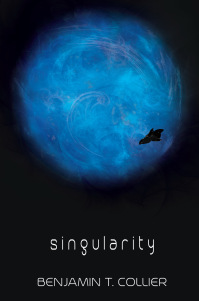
Good Morning, readers, and welcome to our blog on Interviewing Characters. Today I’m with Colin Wade from Singularity.

#CharacterInterview
Lynne: Colin – first, let me say “happy birthday!”
Colin: (Laughs) Thanks. It was quite an accomplishment for me.

Lynne: I understand you’re a pilot for Deep-Sight Space Exploration. How long have you been working for D.S.S.E.?

Colin: Not very long. I mean, I’ve been with them for a long time, in training. And I’ve done some odd jobs here and there but this is my first time doing anything this… big.

Lynne: Yes, I heard your current mission is rather ambitious. Can you explain the goal?

Colin: The mission is to study a singularity. The central point of a black hole. Research into black holes is nothing new, but this is the first time we’ve ever attempted anything this close to one. The D.S.S.E. seems to think we’ve got the technology in place to study it safely but in greater detail than we ever have before. The data we get back from this one mission should match or even surpass what would normally have taken us decades with the previous tech. It’s a good time to be in astrophysics.

Lynne: How is it going?

Colin: Slow. (Laughs) So far it’s been surprisingly difficult to find viable black holes. But it’s probably just the regions we’ve been exploring. Ang seems to think it’s just a matter of time before the perfect one shows itself.

Lynne: Ang?

Colin: Oh, sorry. My onboard computer – the Artificial Neuron Generator for Universal Studies. “Angus” sounds too formal, though, so I just took to calling him “Ang”. He doesn’t seem to mind.

Lynne: I see. I hear this is your first time as captain.

Colin: It’s my first time on official duty as a captain. I mean I’ve had training. I’ve done the tests. But actually sitting in the chair on a live mission is a completely different feeling.

Lynne: Do you find space to be a lonely place?

Colin: It’s certainly different. I don’t mind isolation, necessarily, but space is different from simply finding a quiet room or spending time alone in the woods. To have literally no other living being around for incalculable miles is a feeling hard to describe. Ang keeps me company, though. For an AI he’s not bad to talk to. Plus he plays music for me.

Lynne: Oh, really? What kind of music do you listen to?

Colin: It changes. Ang’s gotten into the habit of picking songs based on my mood. I like a lot of oldies by Sarah McLachlan and Elton John. Lately, Ang’s been playing mostly “Take Me Home” by Phil Collins. And of course, David Bowie has some good ones for my particular career choice.

Lynne: I LOVE Bowie! And yes, I suppose he does have some fitting songs. What made you choose space exploration as a career?

Colin: I never really asked myself that. But if I think about it I guess there’s a lot of reasons. The biggest attraction was probably that it’s quiet. Not that I don’t like people. I like them in small quantities. A little bit at a time, or a few people at a time. But I do my best work on my own, in a quiet room, with all of space to look at. Compared to people, astrophysics is easy.

Lynne: Do you miss home?

Colin: Oh yes. Way more than I thought I would. But they did warn me that isolation can do that.

Lynne: Is there anything you’d like to say to any friends or family back at home?

Colin: Oh geez. Well, the first thing would be to thank everyone for the razor. It’s been working like a charm. I’ll give a shout out to my mom and dad and my sis. I’m sorry I couldn’t be there on my birthday to see everyone, but duty calls. We’ll do a barbeque at mom and dad’s when I get back. I’ve been practicing. I feel like I’m forgetting some people, but whoever you are, just assume that I miss you too. I’ll see you all as soon as I get back, and thanks for all the well wishes. Ang, do you want to say anything? (Brief silence) Really? Ang just says hello. He’s being unsocial.

Lynne: Well thank you so much for doing this interview, Colin. It’s been a pleasure talking with you.

Colin: Oh, the pleasure’s been all mine. It’s been great to hear another voice.


Well, reader, that was an interesting interview. I couldn’t imagine being alone in space for months at a time. Although listening to Bowie and staring at the stars sounds very peaceful.

Which of your characters would you interview? Why did you choose that character? What would you ask them?

Resources:

You can read more about Colin Wade and his extraordinary space mission in Singularity by Benjamin T. Collier.

Singularity by Benjamin T. Collier
Plot twists in every chapter!


Read my other blogs on Character Development:

Writing Fantasy || Characters 1 – Races

Writing Fantasy || Characters 2 – Names

Writing Fantasy || Characters 3 – Occupations

Writing Fantasy || Characters 4 – Personality


Until next time, I hope you are blessed,

Lynne

Writing Fantasy || Plot Twists

What Is A Plot Twist?

As you write your story, look for ways to add an unexpected twist to the plot. These are commonly known as the ‘What If’ scenarios of fiction writing. They throw in something the reader isn’t expecting to happen in the story to add conflict, drama and adventure. Go back to your premise sentence and see where you can spice things up a little. Keep your readers guessing.

Lit sparkler demonstrating an idea

How to Write a Plot Twist

What’s expected and what would happen if it didn’t turn out that way?

Write a sentence about something in your novel your reader will expect to happen.

Now write a What If.

What if that didn’t happen at all? What would happen then?

Now turn that idea upside-down.

What if this other thing happened instead? How would the story unfold?


Example of a great plot twist

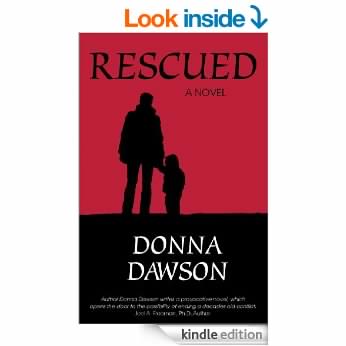
In her poignant novel, Rescued, Donna Fawcett (Dawson) writes about two women;

“Charlene McTaggart can’t conceive and badly wants a child. Dr Jason Steadman goes against those who would do all they can to stop a unique procedure from being performed. A procedure that will save an embryo, prevent a death and give an infertile woman a chance at motherhood”. (back cover logline)

Then Fawcett asks these questions:

“What if there was a solution to abortion?”

“What if pro-life and pro-choice could join forces to see the war over the issue end?”

“Is it possible?”

The answers to these questions fuel a powerful and emotional novel which touches the heart of the reader. As I read Donna’s book I was drawn into the world of possibilities for the female characters and eager to find out how their stories were resolved. Check out Donna’s book:

'Rescued' by Donna Dawson

What If Your Story Just Got Really Weird?

Readers crave a plot twist to keep them interested. What can you add that they may not have been written before? Write as many plot twists as you can think of. Try these exercises to get your inner Tolkien flowing:

  • It’s expected that the villain will be arrested. What if he suddenly vanishes?
  • It’s expected that the rain shower will stop. What if it turns into a red storm?
  • It’s expected that the hero will get the girl. What if she doesn’t like him one bit?

Will this plot twist change your logline? Your logline can change to accommodate your developing story as long as you remain true to your premise. Remember, your back cover isn’t published yet.

Til next time, know you are loved by the One who created you in His own image.

Lynne