Do You Ever Dream Of Being An Elf?

Do You Ever Dream of Being An Elf?

“Do you ever dream of being more than you are? Being a super-hero who can do marvellous feats for others and for God? Someone who can vanquish evil by a spoken word? Well- You Are! …We are all part of something bigger than ourselves; a supernatural world which exists parallel to ours and which few of us see but which interacts with ours in a constant battle for Mankind.”

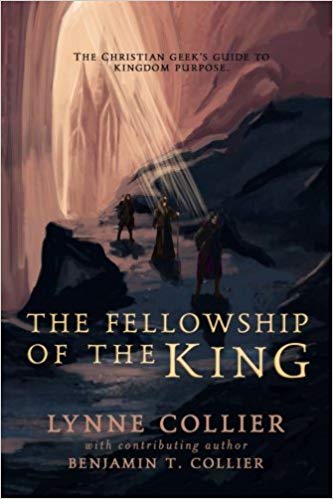
This is the introduction to my new book —


‘The Fellowship of The King – A Christian Geek’s Guide to Kingdom Purpose

Click the book to find out more.

Find Your Christian Life Purpose

What on earth does that mean? That’s a leading question because not all of the book is about this earthly realm. Half of it is about you in a different realm! The first part of the book is discovering how God uniquely designed you before you were born, to be an ambassador (a representative) for His Kingdom. How He gave you specific natural abilities, a specific personality, and ultimately Spiritual Gifts chosen for you to carry out the assignments He has for you on earth—should you chose to accept them.

Find Your Fantasy Alter-Ego

The second part of the book is a fun spin about who you might be in a fantasy realm, your uniqueness translating into a world of fiction and what your missions would be there for the king. It takes you through discovering your race, your choice of weapons, your class (occupation), creating a shield, and your code for the kingdom. Who do think you would be and what mission would you accept for the king?
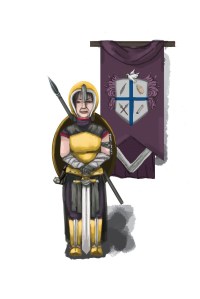
Lynne Collier --my fantasy alter-ego from THE FELLOWSHIP OF THE KING
Lynne Collier –my fantasy alter-ego

The book’s a prelude to my upcoming Speculative Fiction novels set in a fantasy realm but written from a Christian perspective. More about those in the coming weeks.

I wrote this book with my son, Benjamin T. Collier, also a published author, who writes amazing novels of fantasy and science fiction (mum’s bragging rights). We had a lot of fun writing this together and putting the different aspects of humankind and fantasy characteristics together to explore the seen universe and the unseen realms of fantasy. He’s the one who wrote most of the second part of the book, and a good friend of ours, Kirstie Shanks, designed the cover and the artwork. It’s a blessing to be able to work with such talented people who are dear to me and follow after God.

If you’re not inclined to geekdom yourself hopefully you’ll still enjoy the reality half of the book and discover what God has for you in His divine wisdom. It also makes a great gift for a geeky friend. The ensuing conversations could be quite hilarious! You may find you have more in common than you think.

Til next time, know you are loved by the One who created you in His image—and remember:

“Think outside the box. Unless it’s a Tardis –

Always choose the Tardis!”

– Lynne Collier, ‘The Fellowship Of The King’  #christiangeek #christianlifepurpose

tweet this

Lynne

Resources

Benjamin T. Collier

Kirstie Shanks

What Is Christian Speculative Fiction?

What Is Christian Speculative Fiction?

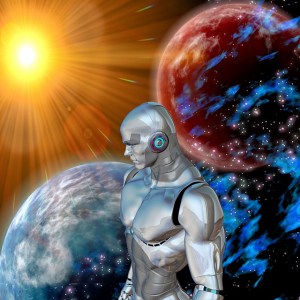
Robot in outer space staring at the sun and planets.
Art by DrSJS

“Biblical [Christian] Speculative Fiction is speculative fiction which uses Christian themes and incorporates the Christian worldview…”  — Wikipedia.

In many of the modern Christian fiction novels, the characters are mainly Christian and act on guidance from God with no overt or miraculous divine intervention. There is almost always a non-Christian character who eventually becomes ‘born again’ and the emphasis is biblical and doctrinal, as in Tim LaHaye and Jerry B. Jenkins’ Left Behind series. It differs greatly from speculations on the Bible and Christianity found in fictional work such as Dan Brown’s The Da Vinci Code.

An example of a story which portrays a biblical and doctrinal emphasis but also features miraculous intervention would be Frank Peretti’s This Present Darkness which features demons, angels, and spiritual warfare.

Examples of stories which reflect a Christian worldview without explicitly Christian references would be The Lord of the Rings by RR Tolkien, C.S. Lewis’ The Chronicles of Narnia, and G. K. Chesterton’s The Ball and the Cross, which are overtly miraculous in content.

So, in a nutshell, Christian Speculative Fiction is any fiction genre which gives a Christian worldview and can incorporate fantasy, science-fiction, dystopia, and other genres which invite us to connect with our Christian beliefs ‘outside the box’.

In the last few years, new venues have opened for the Christian Speculative Fiction genre. More recently, Enclave Publishing (formerly Marcher Lord Press) and LoreHaven have created a platform for writers of Christian Speculative Fiction.

Til next time, know you are loved by the One who created you in His image, which includes that magnificent imagination of yours.

Lynne

Just for fun–Check out LoreHaven’s post about Star Trek Discovery

Switching Focus

My next blog was going to be about compiling a playlist to inspire you as you write your fantasy novel. Instead, I’m letting you, my fellow bloggers, know I’m switching my focus on this site. I’ll let you know how you can still read the playlist post later.

Switching Focus
New Path

#WritingFantasy  Will Carry On

I’ve completed the series of posts I wanted to share with you about Writing Fantasy and the steps I’ve taken on my own journey writing my first fantasy novel. I’m very excited to start the actual writing process this November for my second NaNoWriMo! If you’ve followed my posts over the past few months I hope you’ll join me in November as we fire out 50,000 words together.

My Outline, Setting, Characters, World Building and Premise are all going to be relocated to another blog I write on, White Rose Writers.

So What’s My New Focus? #AmWriting

As most of you know from reading my profile, as well as being a writing coach I’m also a Christian Life Coach and Certified Lay Pastoral Counselor with many years experience coaching and encouraging believers in their walk with God. This will be my main focus on this blog going forward.

I’ll be blogging about Your Sacred Path, Finding Your Life Purpose, Hearing God’s Voice, Choosing Careers and possibly sharing a few gardening tips along the way. I love to network so I’ll be giving you links whenever I can for you to explore further.

My newsletter will be about the books and courses I’ll be writing, plus I’ll let you know when I’m launching something new, and I’ll have giveaways and social media events exclusively for my blog readers. If you choose to continue following me here that would be lovely, if however, you’re interested in continuing to follow my posts on writing, head over to White Rose Writers and follow my posts there, along with branding and marketing tips from my social media partner, Kirstie Shanks.

Thank you for taking time out from your busy life to read and comment.

Till next time here, or at White Rose Writers, I hope you are blessed.

Lynne

Writing Fantasy || Conflict

Writing Conflict Into Your Novel

So you have a nice fantasy/fiction story going on and you have a happy ending. Guess what? We’re going to turn that all upside down now! Get ready to throw your readers a curveball and upset the apple cart. Every story needs conflict – even children’s stories. Think about it. Where would Little Red Riding Hood be without the big bad wolf? We all love a villain to hate.

Writing Conflict
Little Red Riding Hood and the Fox


10 Things To Consider Before Writing Conflict

Some elements to think about as you write the outline of your conflict.

  1. What motivates both your hero and the villain so they’re drawn into the upcoming conflict?
  • Love
  • Greed
  • Pride
  • Anger
  • Duty
  • Other ideas…


  1. What keeps your hero and villain locked together in this conflict?
  • Past History
  • Jealousy
  • Mutual Love Interest
  • Loss of Someone or Something
  • Misunderstanding
  • Other ideas…

12 Key Elements On Writing Conflict

Your hero tries to understand what just happened in the inciting event and what it means to them and their way of life. This is the start of Act 2.

  1. Reveal the power of the antagonist (villain) and the true nature of the conflict arising.
  2. The hero begins to recognize what’s at stake and searches for ways to fight the battle.
  3. Your hero recognizes the true reason behind the conflict.
  4. With new knowledge and understanding, your hero gains headway in the conflict.
  5. Foreshadows Act 3 (sets up the base for what’s coming next) and reminds the hero what’s at stake. (We’ll look at foreshadowing more later).
  6. Your hero rallies everything they’ve got and launches it against the enemy with a seeming
  7. A defeat for your hero after the seeming victory in Act 2. This begins Act 3.
  8. The hero questions their goal, commitment and choices. They begin to doubt themselves and their ability to win the battle.
  9. Your hero comes face to face with the enemy.
  10. The next event is a duel to the death for the hero and the villain. This can be physically or metaphorically. The reader needs to be kept on the edge of their seat here because they know one or the other will lose.
  11. The hero wins and the conflict is ended.
  12. The ending of your story should give the reader ‘breathing space’ and ease them into the hero’s new reality.


Watch a favourite movie – it doesn’t need to be fantasy – and see how the conflict escalates and is resolved.


 Til next time, know you are loved by the One who created you in His image.

Lynne


Resources

The Hobbit -The Battle of the Five Armies

Maleficent

Divergent

Writing Fantasy || Story Arc

What Is a Story Arc?

Most best-sellers and box-office hits have a main character that goes through an enormous transformation and either becomes a hero or ends up becoming a villain. (Anakin as he turns to the Dark Side). The result is what keeps us talking about it long after the story has ended and we’ve slid back into our own reality. It’s this change that intrigues the audience and keeps them riveted to the story, not wanting to put the book down or leave the theatre for a refill of popcorn for fear of missing something huge.

Darth Vader
Darth Vader

4 Key Elements For Character Arc

Award-winning novelists seem to agree that there are four key elements to a character arc which drives a compelling story arc.

  1. Need
  2. Yearning
  3. Weakness
  4. Desire
  • Your story will usually begin with your main protagonist and their setting. His life lacks something he needs and causes a sense of something unfulfilled.
  • The need may be fuelled by a yearning which he may or may not be aware of.
  • The yearning may come from a backstory that caused them to feel weakened by a loss of love, ability, or perhaps a sense of purpose, and makes them fearful, limited by their circumstances and feeling unable to change. The yearning is most likely to be the opposite of what the protagonist’s life is like now. Identify their yearning in a single sentence and let that drive the story arc, for example, he wants to be free (of something or someone), to find true love, to go home again (or make a home for himself).
  • Something happens to your protagonist that changes their view on their daily life and stirs a desire for change. This is the Inciting Event.

This will all happen in Act 1. After the event that happens to your hero to stir their desire, you’ll be ready to think about your story arc and which scenes belong in Act 2. This took me some time to figure out, but I think I have the most important points now. Remember we’re not writing yet, just outlining. Simple point form or one-sentence sticky notes will do.

The Anticipated Conflict

Create intensity towards the anticipated conflict. About a quarter of the way into your novel, the hero will be frantically searching for a reason behind the villain’s antagonism. The hero may not yet realize there’s an underlying cause for the building conflict, or they may have a vague idea but not yet know what’s at stake. The villain may still be taunting the hero to make them give up and turn back.

Before the halfway point of your story, the hero will realize the true nature of the conflict which is imminent and the ultimate power of the villain. Do your notes on story arc build up to your halfway conflict? Include your notes on the hero’s personality and flaws that hold them back, how their mentor tries to persuade them to believe the truth, plot twists, and some fun scenes with their companions for comic relief (The Avengers).

Next time we’ll look at how to generate conflict and why it propels the story.

Til next time, know you are loved by the One who created you in His image.

Lynne


Resources:

Personality Types 

Star Wars – Episode III: Revenge of the Sith

The Avengers