Finding Your Writer’s Voice

Finding your writer’s voice –
So you’ve decided to become a writer.
How do you decide what to write about?

Start with what compelled you to write in the first place. Chances are, you have a passion for something and want the whole world to know about it. You want to share your passion. That’s what you write about. Even if you decide to write an autobiography, it can be full of passion. After all, aren’t we passionate about ourselves? I hope so! So write about your experiences, good or bad, that link to your passion.

Herein lies your writer’s voice.

It’s not an audible voice, but a recognizable pattern of words which will speak to your audience and connect you to your readers. They’ll come to hear you in the way you write; the influence of dialect, the grammar (or lack thereof) and style, as if they were listening to spoken words. So be yourself. Let your audience get to know you. You don’t need to be famous, but you do need to be authentic.
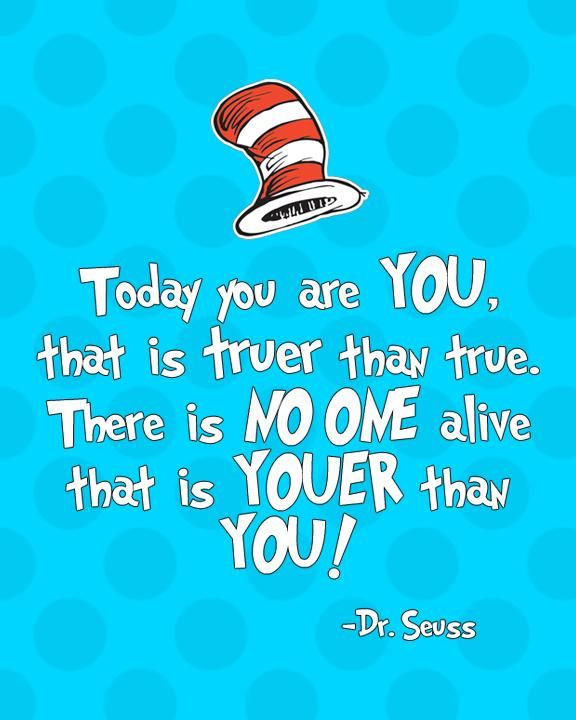
Dr. Seuss. Today you are you...

printable from makingtheworldcuter.com


I started out as a writer after three people told me I should write a book about raising my son who’s on the Autism Spectrum. Many people knew my journey through short stories I’d spoken, but encouraged me to write them down to share with others who didn’t know me. Until then, I hadn’t thought of being a writer. But looking back, I remembered I used to love to write fictional stories and poetry. I had simply forgotten. It’s funny how life can get you so far off track.

Maybe you have a similar story to tell. Have others encouraged you to write? Have you always been a writer, even if only in notebooks no one else reads? We all come to this point from different paths. It doesn’t matter how you start out. It just matters that you start.

So  discover what inspires you and type, type, type like crazy. If you want to write a fictional story, check the ‘Inspiring Imagery’ on White Rose Writers’ Pinterest for some ideas.  It’s the board where I pin pics of fantasy and sci-fi and scenes in nature around the world, to encourage writers to get those creative juices flowing. I love the creative mind.

Find books on topics you’re passionate about and read, read, read. Search online for blogs to follow from people who have the same passion. Can you ‘hear’ them in their writing? Do you recognize their ‘voice’?

Write a few blogs, a magazine article, a review of someone else’s work for practice. Save them in docs and don’t worry about editing them. Organize them and file them away for now. We’ll look at what to do with them next time. Just immerse yourself in the process and let it carry you away. Find your writer’s voice.

Enjoy!

Lynne


Where to Begin When You’ve Decided to Write

I’m not sure if that’s a declaration or a question.
I’ve been writing for about two years. Actually, that’s not entirely accurate. I’ve been writing since I was about four – I’ve been writing professionally, that is to say, being paid for what I write, for about three years. So I’m classed as a novice writer with a lot yet to learn. I was told recently by a seasoned author, that we never stop learning as long as we never stop writing. I’m beginning to understand that.
Something else I’ve learned recently about the life of a writer is – to share what I’ve learned with others. I already knew this from a general perspective as a life coach and workshop host, to pass on knowledge to the next generation of people so we, as a global community, may improve life for those to come. It didn’t occur to me to apply it to my writing. I thought I should guard my work against the world until it was acceptable to read, without flaws. And isn’t it self-defeating to share my work, in case someone beats me to the finish line? I’ve learned the answer is “no”. What does it matter if someone steals my idea and creates something from it? Remember – share for the next novice to learn from.
So as I embark on an adventure of literary discovery, I invite you to join me; to wade through these sometimes murky waters, to experience the flow of a river of creative thoughts and ride the waves of joy and excitement with me as we blog, journal, research and publish together.

What I learned first:
• You can’t call yourself a writer if you’re waiting to get better at it. If you’re waiting – then you’re a waiter, not a writer. So just start writing!
• Practice calling yourself a writer. If you’ve written your first sentence of a 300-page novel – congratulations – you’re a writer!
• Don’t let anyone steal your dream – not even you. If someone says you can’t make a living at it or pretty much gives you the impression of “who do you think you are”? don’t buy into that. Ignore them or have a good answer ready. I know many people who earn full-time pay for writing.
• Research what you’re writing about; whether it’s a novel, a series of blogs, a magazine article or a collection of thoughts you don’t yet know what to do with, you need to be able to link, accredit and support what you say. If you’re writing a historic novel, for example, you’ll need to know all you can about the aspects of life at that time in history. Keep your information in a file specific to that piece, for future reference. Fans may be interested in where you learned about your storyline.
• Set a schedule for yourself. Be realistic in how many hours a day, how many days a week, you want to devote to writing. Use a filing system online, on your PC or laptop, or a calendar pinned to your workstation with different couloured sticky notes. Whatever works for you. Be prepared for unexpected intrusions and don’t get your knickers in a knot over them.

I would like to end this first Building a Writing Platform by sharing from a book I recently purchased,Show Your Work by Austin Kleon. On being an amateur writer, Kleon writes;
“Don’t worry, for now, about how you’ll make money or a career of it. Forget about being an expert or a professional, and wear your amateurism (your heart, your love) on your sleeve. Share what you love, and the people who love the same things will find you”.

So how did I do?
As you start your literary journey, I hope you’ll keep in touch. Let me know if this post helped you. Leave a comment or a question.

I’d love to hear from you. – Lynne